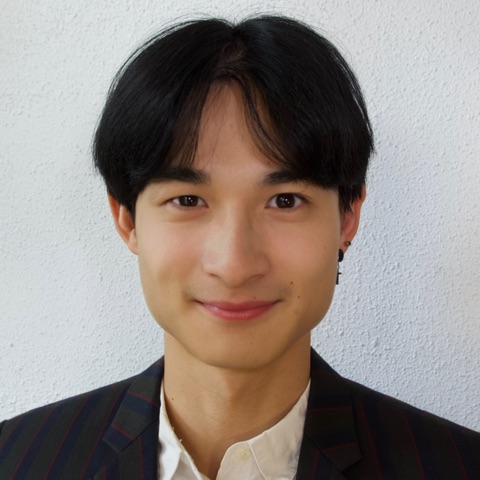
I am currently seeking a motivated PhD student to join my research group in exploring transformative new directions in cybersecurity and agentic AI. My research emphasizes proactive security solutions across the vulnerability lifecycle, with a particular focus on using agentic AI systems and large language models (LLMs) to address critical challenges in vulnerability discovery, exploit reproduction, and automated patch generation. This project aims to create benchmarks, including reproducible environments that enable comprehensive evaluation of agentic AI approaches designed for cybersecurity.
Academic Background and Research Focus
I am a Lecturer (Assistant Professor) in the Software Engineering group within the School of Computing and Information Systems at the University of Melbourne. I completed my PhD at Monash University in January 2025, under the supervision of Dr. Kla Tantithamthavorn and Dr. Trung Le. My research focuses on developing proactive security approaches for the DevSecOps lifecycle. My work has been published in top-tier Software Engineering conferences, including the International Conference on Software Engineering (ICSE), the International Conference on the Foundations of Software Engineering (FSE), the International Conference on Automated Software Engineering (ASE), and the Mining Software Repositories Conference (MSR). I have also published in high-impact journals such as IEEE Transactions on Software Engineering (TSE), ACM Transactions on Software Engineering and Methodology (TOSEM), and Empirical Software Engineering (EMSE). My broader research interests lie in software engineering, particularly in software security throughout the DevOps lifecycle (DevSecOps).
✨Ask AI about Michael
Questions about the PhD position or my research? Pick one, or write your own, and open it in your AI assistant. It arrives pre-loaded with facts from this page, so the answer comes from my actual work, not from guesswork.
Opens in a new tab and copies the prompt to your clipboard. Some assistants fill it in for you; otherwise, just paste. Nothing is sent to this site. AI can make mistakes, so please check anything important, especially admissions or funding details.
Research focus
🤖Build Agentic AI for Cybersecurity
Vulnerability discovery in large code bases
Exploit reproduction
Automated patch generation
📊Evaluate with Reproducible Benchmarks
Benchmarks for agentic AI in cybersecurity
Reproducible environments for evaluation
LLMs on vulnerability detection, classification, and repair
🧰Deploy as Practical Security Tools
AIBugHunter: A Deep Learning-based Real-Time Security Testing Tool in IDEs (Website | Free Download)
Special Invitees in MSR 2022 to submit an extended paper to the EMSE journal
Teaching
👨🏫
Subject Coordinator of COMP90082 - Software Project from S2 2025 to present at the University of Melbourne
👨🏫
Subject Lecturer of COMP90082 - Software Project in S1 2025 at the University of Melbourne
👨💻
Lecturer in a graduate research training program, IT Quantitative Research Methods in 2024 at Monash University
👨💻
Guest Lecturer in a postgraduate unit, FIT5136 - Software Engineering, where I taught topics related to software engineering, cybersecurity, and AI in S1 2024 at Monash University
👨🏫
Teaching Associate in a postgraduate unit, FIT5215 - Deep Learning, where I taught technical contents such as mathematical fundamentals for deep learning, basic deep learning architectures like RNNs and CNNs, and advanced topics including Transformers, diffusion models, and adversarial learning in S2 2024 at Monash University
📝Student Evaluation: 92/100 (Very High, Exceeding expectations). 🔍 View report.
👨🏫
Teaching Associate in a postgraduate unit, FIT5136 - Software Engineering, where I taught software engineering concepts from agile planning to object-oriented software implementation in S2 2024 at Monash University
📝Student Evaluation: 98/100 (Very High, Exceeding expectations). 🔍 View report.
Student Testimonials
✅
I enjoyed the perspective and the anecdotes given by a person actively contributing to the software engineering landscape. I would like to hear more!
✅
Good insights about AI in Software engineering. Good engagement with audience.
✅
Michael is very passionate about teaching AI for SE. His teaching is very enthusiastic, and is at a good pace, clear, well-organised, and get to the point. The lecture is very informative, and useful to the students. Keep up the great work. He can add interactive components (e.g., Flux, PollEV), or peer discussion activities during the lecture (e.g., breakout rooms) in the future.
✅
Michael’s class was fabulous! It would be highly appreciating if we can have more classes from Michael.
✅
The lecture was clearly laid out, very comprehensive and very easy to understand. Thank you for today's lecture!
Community Service
🔎
A PC in the Research Track in ICSE 2027 Conference Rank: CORE A*
🔎
A PC in the Research Track in FSE 2027 Conference Rank: CORE A*
🔎
A PC in the Software Engineering in Practice (SEIP) Track in APSEC 2026
A PC in the Artifact Evaluation Track in ICSE 2024 Conference Rank: CORE A*
🔎
A PC in the Technical Paper Track in MSR 2024 Conference Rank: CORE A
👨🏫
Presenter at Monash University Open Day Event 2022, 2023, 2024
😼
A Student Volunteer in ICSE 2023 Conference Rank: CORE A*
🔎
A Junior PC in the technical paper track in MSR 2023 Conference Rank: CORE A
🔎
A Web Co-Chair as part of the organization committees in MSR 2023 Conference Rank: CORE A
👨🏫
Presenter at Monash University TechFutureFest 2022
🔎
A PC in the Artifact Evaluation Track in ASE 2022 Conference Rank: CORE A*
Fundings
💰
University of Melbourne ECRG 2027 grant (AUD 33,000)
💰
SIGSOFT CAPS Travel Support Funding for ICSE 2024
💰
Google Cloud Research Credits 2023
💰
Full Monash University Graduate Scholarship for my PhD study
Key Projects
👨💻
AIBugHunter Project: A Practical Open-Source Tool available in VSCode for Predicting, Classifying, and Repairing Software Vulnerabilities (Google Cloud Research Credits provide funding for the computing service of the resulting tool)
👨💻
Explainable AI Tools for Explaining Software Defect Predictions of Machine Learning Models
👨💻
PhD Thesis: Toward More Effective Deep Learning-based Automated Software Vulnerability Prediction, Classification, and Repair